Even in Australia, Patients Report the Same Pattern of Misdiagnosis

Early data suggests a consistent global experience—despite different tick species
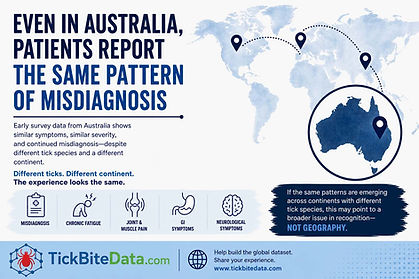
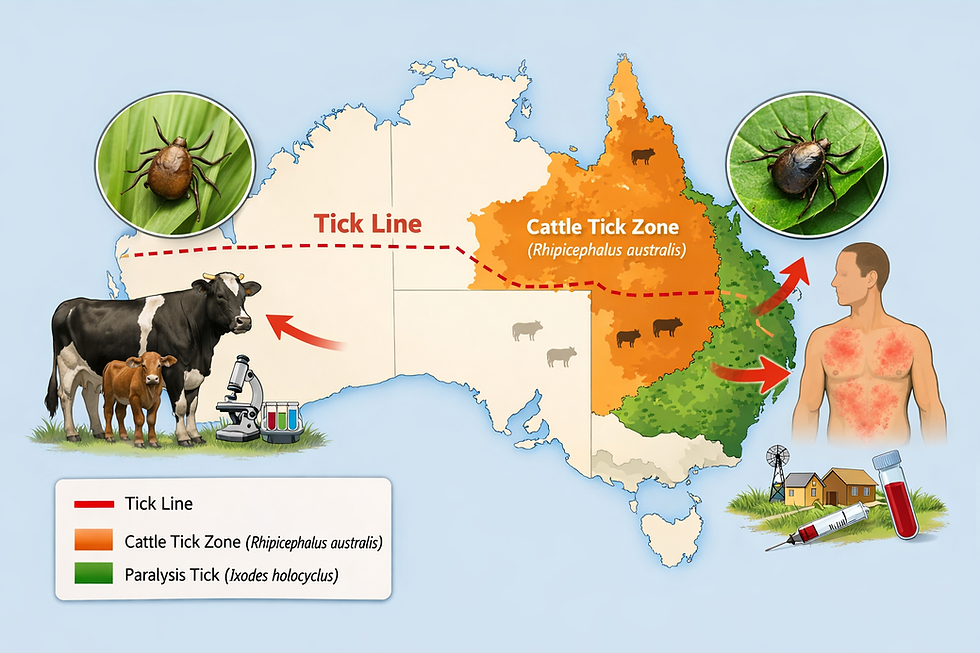
Australia has entirely different tick species than the United States. Different environment. Different exposure risks. Yet early patient-reported data from TickBiteData.com is beginning to show something familiar. The same symptoms.The same confusion.And the same pattern of misdiagnosis.
A Small but Important Dataset
Survey responses from Australia are still emerging.
While this is a small sample, it provides an early directional look at how these conditions are experienced outside of the United States.
And even at this stage, patterns are emerging.
Misdiagnosis Still Present
Among Australian respondents, approximately 31% reported being initially misdiagnosed.
This is notable.
Even within a different healthcare system—and with different tick species involved—patients are still encountering delays and confusion in diagnosis.
Symptom Consistency Across Continents
Australian respondents report symptom patterns that closely mirror those seen in other regions, including:
Gastrointestinal issues
Severe fatigue
Muscle and joint pain
Neurological symptoms in some cases
While the prevalence of specific symptoms varies, the overall pattern remains consistent.
Why This Matters
Tick-borne conditions are often discussed as region-specific, tied closely to local tick species.
But if patients across different continents are reporting similar symptoms and similar diagnostic challenges, this raises an important question:
Is this being viewed too narrowly?
A Pattern Worth Paying Attention To
It is too early to draw definitive conclusions from a small dataset.
However, the consistency between Australian responses and broader global data suggests that this may not be an isolated or region-specific issue.
Instead, it may point to a broader gap in recognition.
The Role of Patient-Reported Data
Traditional data sources are essential—but they don’t always capture the full patient experience.
Patient-reported data helps identify patterns early, especially in conditions that are still being defined and understood.
As more responses are collected from Australia and other regions, these patterns will become clearer.
Conclusion
Different ticks. Different continent.
Yet the experience looks strikingly similar.
If the same patterns of symptoms and misdiagnosis continue to emerge globally, it may signal the need for a broader, more unified approach to understanding these conditions.
Contribute to the Dataset
If you are located in Australia—or anywhere globally—and have experienced symptoms following a tick bite, you can contribute to this growing dataset.