

Alpha-gal Isn’t Limited to One Tick Species — It’s a Global Emerging Condition

Updated: Apr 10
For years, alpha-gal syndrome has been narrowly defined as a food allergy—specifically, a delayed allergic reaction to mammalian meat following a tick bite. But emerging global data and patient-reported experiences suggest that this condition may be far more complex than originally understood.
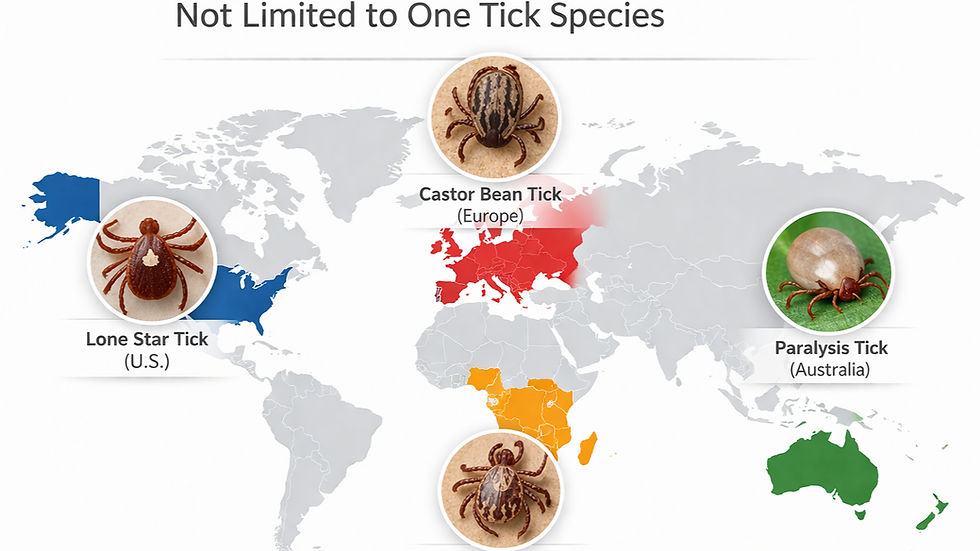
Alpha-gal is not limited to one region, one tick species, or one type of reaction. It is increasingly being reported across continents—from the United States to Australia, Europe, and Africa—linked to multiple tick species. What was once considered rare is now clearly part of a growing global pattern.
More Than Just a Meat Allergy
The most widely recognized symptom of alpha-gal syndrome is a delayed allergic reaction after consuming mammalian products. For some, this means avoiding beef, pork, dairy, and even hidden mammalian ingredients in processed foods, medications, or beauty products. In more severe cases, exposure can trigger life-threatening anaphylaxis.
But not everyone experiences alpha-gal the same way. Some individuals report milder reactions and can maintain a relatively normal lifestyle with dietary adjustments. Others must navigate an extensive list of triggers, including non-food exposures such as cosmetics and pharmaceuticals.
Data submitted through our survey highlights a critical gap in how alpha-gal is understood. 74% of respondents report reactions to dairy, and 78% report reactions to gelatin—ingredients commonly found in everyday foods, medications, and personal care products. These findings challenge the idea that alpha-gal is limited to red meat alone and point to a much broader range of exposure pathways that patients must navigate.
Emerging Patterns Beyond Allergic Reactions
What stands out most in the submissions that we've received is the prevalence of neurological and systemic symptoms:
78% reported brain fog
74% reported anxiety
61% experienced headaches
56% reported mental fatigue
52% experienced dizziness
56% reported rapid heart rate
26% reported tremors in their limbs
While some of these symptoms—such as dizziness or rapid heart rate—can occur during allergic reactions, many others, including brain fog, tremors, and persistent fatigue, are not typically emphasized in traditional food allergy presentations. Notably, many respondents report that these symptoms occur outside of immediate food-related reactions, suggesting a more complex and potentially systemic response pattern.
In addition, many individuals report:
Arthritis and joint pain in the limbs
Sensitivity to fumes or environmental triggers
Chronic migraines
These patterns suggest something more complex than a simple allergic response. Alpha-gal may involve broader immune and neurological responses than currently recognized.
A Pattern of Misdiagnosis
Another critical finding from our survey highlights a gap not just in diagnosis—but in awareness.
Nearly 70% of respondents reported being initially misdiagnosed
Only 52% said their physician had heard of alpha-gal syndrome (predominantly in midwest US States. Australia & African physicians have not heard of Alpha-gal)
This means that nearly half of patients are seeking care from providers who may not yet be familiar with the condition. This lack of awareness helps explain why so many patients experience:
Delayed diagnoses
Confusing or conflicting medical guidance
Symptoms that are dismissed or attributed to unrelated conditions
Many patients are navigating symptoms that:
Don’t fit neatly into traditional allergy categories
Overlap with neurological or inflammatory conditions
Evolve over time
A Comparison Worth Exploring
Alpha-gal syndrome and Lyme disease are categorized very differently:
Lyme disease → infectious bacterial illness
Alpha-gal syndrome → allergic condition
They are studied in separate fields, treated differently, and rarely discussed together—despite sharing a common origin: tick exposure. Yet, when looking at patient experiences, there are notable overlaps:
Long-term symptoms
Systemic inflammation
Neurological complaints
Significant impact on quality of life
While these conditions are not the same, the patient experience shows meaningful overlap that deserves further study.
A Call for Broader Recognition
Our data—and growing global reports—suggest that alpha-gal should not be viewed solely through the lens of a food allergy. It is:
Global
Variable in severity
Systemic in many cases
Limiting alpha-gal to a narrow definition may overlook the full scope of what patients are experiencing. Greater recognition could lead to:
Faster diagnoses
Improved patient outcomes
More comprehensive research
Increased awareness among healthcare providers
Moving Forward
Alpha-gal syndrome is already challenging traditional boundaries—geographically, medically, and clinically. What’s becoming clear is that:
It is not limited to one tick species
It is not limited to one type of reaction
And it may not fit neatly into a single category
Understanding alpha-gal as a global, emerging condition with diverse presentations is an important step toward improving outcomes for those affected.
Help Advance the Data
If you’ve experienced a tick bite or symptoms consistent with alpha-gal syndrome, your experience matters. By contributing to TickBiteData.com, you’re helping build a clearer, data-driven understanding of how this condition affects people around the world. Together we can make a difference!
Understanding the Broader Implications
As we delve deeper into the complexities of alpha-gal syndrome, it’s essential to recognize its broader implications. This condition doesn't just affect individual health; it has far-reaching consequences for public health, food safety, and healthcare systems.
The Public Health Perspective
From a public health standpoint, understanding alpha-gal syndrome is crucial. As more cases are reported globally, there is a pressing need for awareness campaigns. These campaigns can educate the public about the risks associated with tick bites and the potential for developing alpha-gal syndrome.
Food Safety Concerns
Food safety is another area that requires attention. With many individuals affected by alpha-gal syndrome needing to avoid mammalian products, there is a growing demand for clear labeling and safe food alternatives. Food manufacturers and restaurants must be educated about the condition to accommodate those affected.
Healthcare System Challenges
The healthcare system faces challenges as well. With many patients experiencing misdiagnosis, there is a need for better training for healthcare providers. This includes understanding the symptoms of alpha-gal syndrome and recognizing its potential overlap with other conditions.
The Role of Research
Research plays a vital role in advancing our understanding of alpha-gal syndrome. Ongoing studies can help uncover the underlying mechanisms of the condition and its various presentations. This research can lead to improved diagnostic tools and treatment options, ultimately enhancing patient care.
Conclusion
In conclusion, alpha-gal syndrome is a complex and evolving condition that requires our attention. By increasing awareness, improving education, and advancing research, we can better support those affected. Together, we can work towards a future where individuals with alpha-gal syndrome receive the care and understanding they deserve.


