100 Hidden Mammal Ingredients Alpha-Gal Patients Should Avoid
Updated: Mar 24

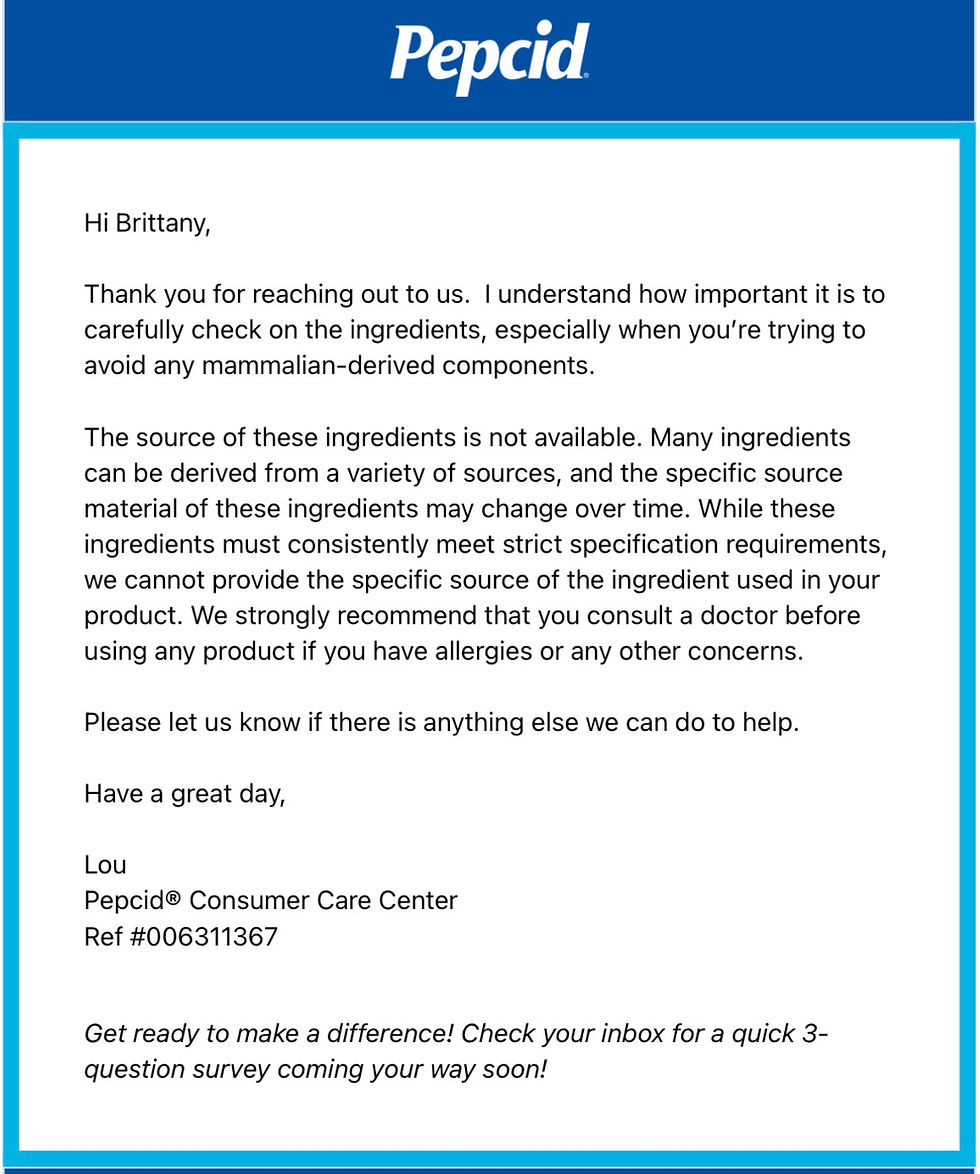
If you have alpha-gal syndrome (red-meat allergy), you may react to mammal-derived ingredients that are hidden in foods, supplements, medicines, cosmetics, and other products. Below is a concise, practical list of 100 ingredients and terms that often indicate a mammalian source — or may be sourced from mammals — so you can watch labels and ask manufacturers. Many entries can also be plant- or microbe-derived, so always verify the source and consult your clinician or an allergist before trying new products.
Important: This is informational only — not medical advice. Always contact manufacturers and your healthcare provider for confirmation.
List of 100 hidden mammal-derived (or possibly mammal-derived) ingredients
Hydrolyzed collagen / collagen hydrolysate
Gelatinized gelatin (capsule shells)
Bovine serum albumin (BSA)
Sodium caseinate
Caseinates (general)
Milk protein concentrate / milk protein isolate
Milkfat / milk solids
Butter / butterfat
Ghee / clarified butter
Buttermilk / buttermilk powder
Cream / cream powder
Cheese / cheese powder / cheese flavor
Lactalbumin / alpha-lactalbumin / beta-lactoglobulin
Hydrolyzed milk protein / hydrolyzed whey
Milk derivative (ambiguous; may be mammal)
Rennet / animal rennet / calf rennet
Pepsin (when bovine/porcine source)
Trypsin (bovine/porcine source)
Pancreatin (porcine)
Meat extract / meat broth / meat stock
Bone broth / bone marrow
Beef flavor / beef extract
Pork flavor / pork extract
Meat flavor / natural meat flavors (may be mammal)
Animal fat / animal shortening
Tallow (beef/sheep)
Suet
Lard (pork fat)
Suet-derived ingredients
Stearic acid / stearate (can be animal-derived)
Magnesium stearate (may be animal- or plant-derived)
Calcium stearate (may be animal- or plant-derived)
Glycerin / glycerol (may be animal-derived)
Mono- and diglycerides (may be animal-derived)
Diglycerides / glycerides (ambiguous source)
Natural flavor / natural flavors (may include mammalian)
Flavoring components (ambiguous — ask manufacturer)
Enzymes listed generically (ask source)
Collagen peptides
Bovine collagen peptides
Porcine collagen peptides
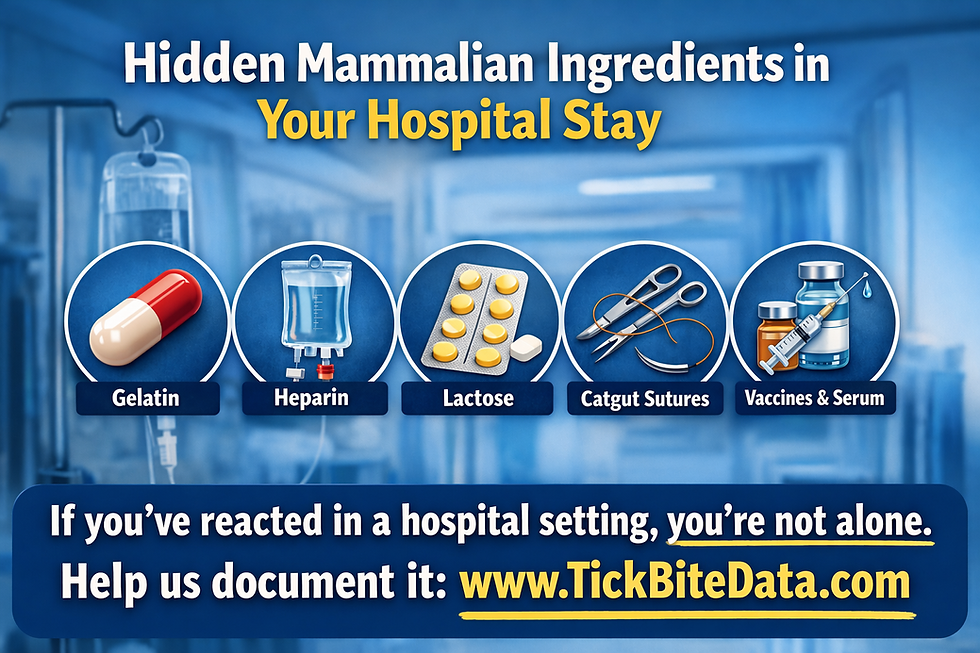
Gel caps (gelatin capsules)
Softgel shells (often gelatin-based)
Enteric coatings (may use gelatin or animal stearates)
Capsules (hard gelatin)
Injectable gelatin (medical/vaccine stabilizer)
Vaccine stabilizers containing gelatin
Antivenom or biologicals using bovine serum
Serum-derived ingredients (e.g., fetal bovine serum traces in lab products)
Blood-derived ingredients (hemoglobin, blood meal)
Blood plasma / blood proteins
Albumin (when from mammalian serum)
Collagenase (bovine-derived preparations)
Bone char (used in sugar refining; may indicate mammal processing)
Whey permeate
Casein hydrolysate
Casein phosphopeptides
Lactose derivatives (e.g., lactitol, lactulose — check source)
Milk sugar derivatives (ambiguous)
Dairy protein hydrolysates
Cheese cultures derived with animal enzymes
Flavor enhancers with animal sources (e.g., some meat-derived hydrolysates)
Hydrolyzed vegetable protein (HVP) sometimes cross-contaminated or blended with animal hydrolysates — verify
Meat by-products
Animal-derived glycerides (listed as “from animal source”)
Animal collagen membrane (in medical/dental products)
Biological glues / surgical adhesives with bovine/porcine collagen
Lanolin (wool wax — sheep-derived)
Tallow-based soap or cosmetics
Animal-derived stearins in cosmetics
Snail mucin is not mammal (ignore) — included here to note non-mammal sources; focus remains on mammal-derived items.
Hydrolyzed beef protein
Hydrolyzed pork protein
Beef gelatinized flavors
Pork gelatinized flavors
Meat hydrolysate
Bone-derived gelatin (bone collagen)
Calf intestine enzymes (used in food production)
Lymph-derived products / animal lymph extracts
Gelatinized dairy derivatives in confectionery (marshmallows, gummies)
Marshmallows (often contain gelatin)
Gummy candies (gelatin-based)
Some probiotic capsules (gelatin shells or dairy carriers)
Whey-based probiotics / prebiotics
Casein-based coatings on nuts / cereals
Dairy-based emulsifiers in processed foods
Animal-derived plasmin or proteases (used in specialty food processing)
Animal-derived culture media residues (in some specialty ingredients) — ask supplier
Pet food ingredients (many include mammal derivatives that can cross-contaminate processing lines)
“May contain milk” / “processed in a facility that also processes milk/meat” labels (risk of cross-contact)
Any ingredient labeled “from animal source” or listing a mammal (cow, bovine, beef, lamb, sheep, goat, pork, pig, porcine, porcine-derived, calf, bovine-derived)
Practical tips
When in doubt, contact the manufacturer to ask the source (bovine, porcine, plant, microbial).
Watch capsule shells, gelatin-based candies, processed foods, supplements, vaccines, and cosmetics.
Pay attention to ambiguous terms (natural flavors, glycerides, stearates, mono/diglycerides, gelatin alternatives) — they may be plant- or animal-derived.
Keep an allergy card that states you
react to mammalian products and ask restaurant staff and pharmacists.
Consult your allergist for testing, personalized avoidance strategies, and emergency plan (e.g., epinephrine if prescribed).
This list is a starting point to help you identify likely mammal-derived ingredients. Because many ingredients can be sourced from plants, microbes, or animals, always verify the origin with the manufacturer and follow your healthcare team’s guidance.