The Hidden Economic Burden of Alpha-Gal Syndrome: A Patient-Reported Perspective on Healthcare Costs, Misdiagnosis, and Socioeconomic Barriers

When “safe food” becomes a luxury, alpha-gal syndrome is no longer just a dietary restriction—it becomes an economic disease.

Abstract
Alpha-gal syndrome (AGS), a tick-associated condition characterized by a delayed hypersensitivity to mammalian-derived products, is increasingly recognized across multiple continents. Despite growing awareness, its economic impact remains largely unquantified. This analysis explores the direct, indirect, and systemic costs associated with AGS using patient-reported data, existing literature on comparable conditions, and economic modeling frameworks. Findings suggest that AGS represents a significant and underrecognized financial burden, driven by delayed diagnosis, misclassification, chronic symptom management, elevated healthcare utilization, and socioeconomic barriers to safe food access.
Introduction
Alpha-gal syndrome is frequently described as a “red meat allergy,” yet patient-reported experiences suggest a more complex condition involving multisystem symptoms, variable triggers, and prolonged disease courses.
While clinical research has focused primarily on immunologic mechanisms and acute allergic responses, limited attention has been given to the broader economic consequences of AGS—particularly those stemming from:
Delayed or incorrect diagnosis
Extensive and repeated medical evaluations
Chronic symptom management
Disruptions to employment and daily functioning
As tick exposure rises globally, understanding the true economic burden of AGS is essential for guiding research priorities, improving clinical recognition, and informing public health strategy.
Methods
Data Sources
This analysis integrates:
Patient-reported survey data collected via TickBiteData.com
Published literature on food allergy and chronic disease economic burden
Comparative economic models from tick-borne illnesses such as Lyme disease
Analytical Approach
Due to limited AGS-specific economic studies, a proxy modeling approach was used:
Identification of cost drivers reported by patients
Mapping of these drivers to established economic burden frameworks
Development of conservative estimates using available prevalence data
This approach prioritizes directional insight over definitive cost quantification.
Results
1. Diagnostic Delay and Misclassification
Patient-reported data consistently demonstrate:
High rates of initial misdiagnosis
Consultation with multiple healthcare providers prior to diagnosis
Frequent misattribution to unrelated conditions (e.g., fibromyalgia, IBS, anxiety-related disorders)
Patient-reported data further indicate that many individuals consult multiple providers prior to diagnosis, reinforcing the role of diagnostic delay as a primary cost driver.
These patterns often result in:
Repeated laboratory testing
Specialist referrals
Prolonged periods without appropriate management
👉 Economic implication: Substantial accumulation of avoidable healthcare costs prior to accurate diagnosis.
2. Direct Medical Costs
Individuals with AGS frequently incur ongoing healthcare expenses, including:
Emergency care for allergic reactions or anaphylaxis
Prescription medications (e.g., epinephrine auto-injectors, antihistamines)
Follow-up visits and symptom monitoring
In addition to standard care, patient-reported data suggest a pattern of repeated acute care utilization, including emergency visits and hospitalizations, which may significantly increase direct medical costs.
The variability and unpredictability of triggers can further increase healthcare utilization over time.
3. Indirect Costs: Productivity Loss
A significant proportion of patients report:
Reduced work capacity
Temporary or permanent job loss
Impaired physical and cognitive functioning
Frequent medical appointments and episodic care needs may also contribute to work disruption, compounding indirect economic losses.
These effects extend beyond the individual, contributing to:
Lost productivity at the employer level
Household financial instability
Broader economic strain
👉 In many chronic conditions, indirect costs exceed direct medical expenses, suggesting a potentially substantial hidden burden in AGS.
4. Lifestyle and Hidden Costs
Beyond clinical care, AGS introduces ongoing financial strain through:
Specialized dietary requirements
Replacement of household and personal care products containing mammalian-derived ingredients
Social and travel limitations
These costs are rarely captured in traditional healthcare analyses but represent a persistent and cumulative economic burden.
5. Estimated Economic Impact (Preliminary Model)
Using conservative assumptions:
Estimated affected population (U.S.): hundreds of thousands
Modest annual per-patient cost estimate: $2,000–$5,000 (combined direct and indirect costs)
This suggests a baseline annual economic burden in the range of hundreds of millions to billions of dollars.
These estimates likely underrepresent the true impact, as they do not fully account for:
Severe or complex cases
Long-term disability
Undiagnosed or misdiagnosed populations

6. Socioeconomic Constraints and Secondary Exposure Risk
An additional and often overlooked dimension of alpha-gal syndrome (AGS) is the role of socioeconomic factors in exposure risk and disease management.
Patient-reported data and community observations suggest that some individuals with AGS experience reactions despite avoiding direct mammalian meat consumption. One proposed explanation includes indirect exposure pathways, such as:
Poultry or other animal products derived from livestock fed diets containing mammalian byproducts
Cross-contamination in food production systems
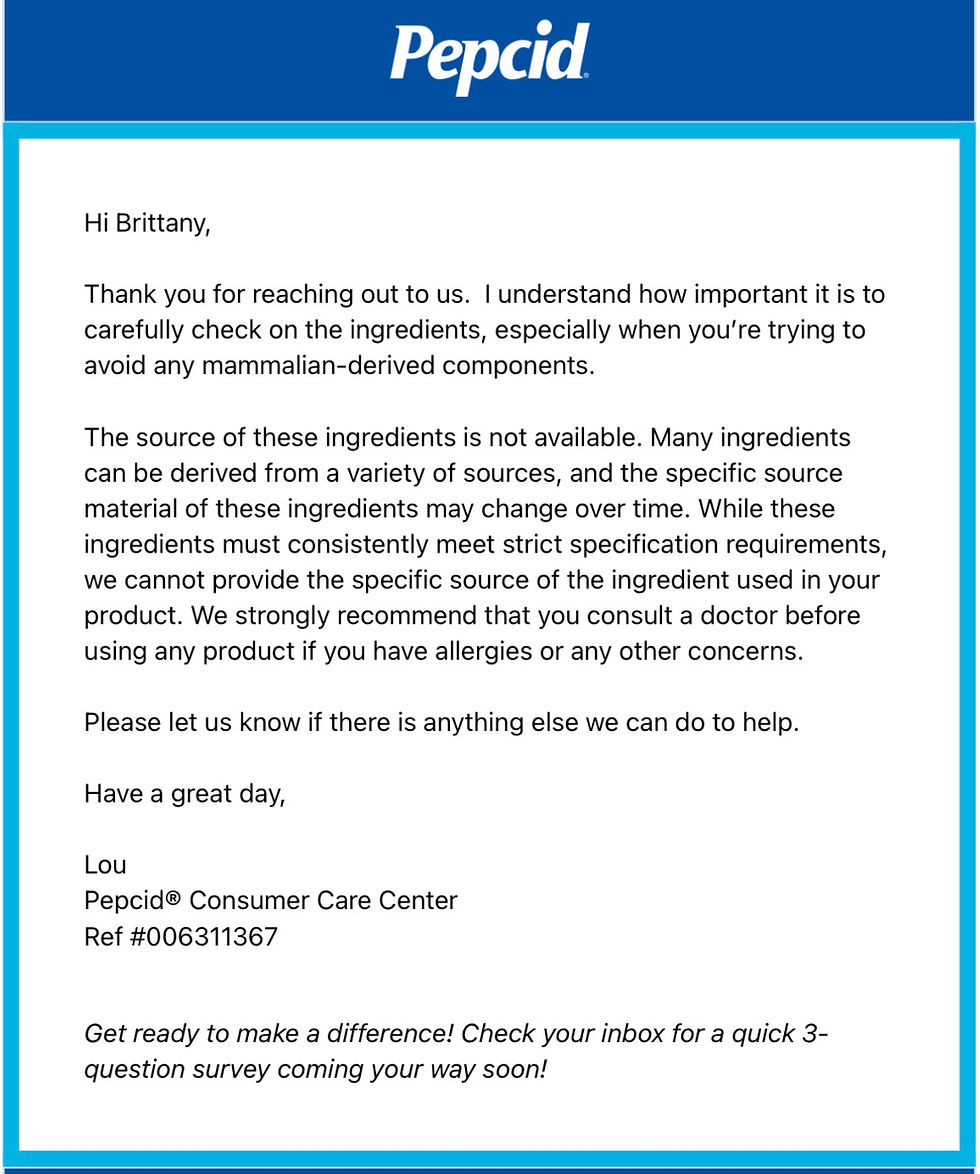
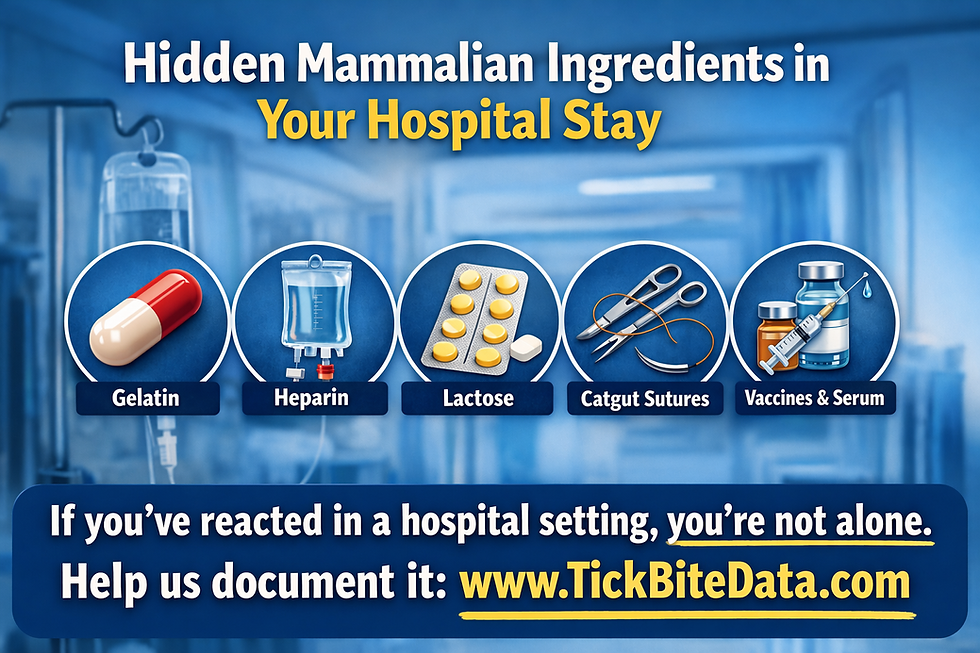
Hidden mammalian-derived ingredients in processed foods
While these mechanisms require further clinical investigation, they highlight a critical issue:
Not all patients have equal access to food systems that allow for strict avoidance.
Many individuals managing AGS report:
Reliance on lower-cost, widely available food options
Limited access to specialty or tightly controlled supply chains
Increased financial strain due to ongoing medical expenses
This creates a compounding economic and health effect, where:
Financial limitations restrict access to lower-risk food options
Increased exposure risk contributes to ongoing or unpredictable reactions
Persistent symptoms drive continued healthcare utilization
👉 In this context, AGS extends beyond a clinical diagnosis and becomes a food access and economic equity issue.
7. Healthcare Utilization and System Burden (Patient-Reported Data)
Patient-reported data collected through TickBiteData.com provide additional insight into the real-world healthcare burden associated with alpha-gal syndrome (AGS).
Across respondents, several consistent patterns emerge:
Patients frequently report consulting multiple healthcare providers prior to diagnosis, reflecting prolonged diagnostic uncertainty
Many individuals describe repeated emergency or urgent care visits related to symptom flares or unexplained reactions
A subset of patients report hospitalizations, with some requiring intensive care (ICU-level support)
Ongoing care often includes regular monthly medical visits, particularly among those with persistent or severe symptoms
While precise cost data are still being quantified, these patterns suggest that AGS contributes to:
Elevated healthcare utilization
Recurrent acute care episodes
Long-term outpatient management
👉 Importantly, these findings align with broader economic models of chronic and poorly recognized conditions, where delayed diagnosis and episodic care significantly increase total system cost.
In this context, AGS may represent a form of “high-friction healthcare utilization,” where patients cycle through multiple levels of care before receiving appropriate diagnosis and management.
Discussion
These findings highlight a critical and underexplored reality:
Alpha-gal syndrome is not only a medical condition—it is a systemic economic burden shaped by delayed recognition, inconsistent diagnosis, and unequal access to safe resources.
Key drivers of this burden include:
Limited provider awareness and education
Fragmented diagnostic pathways
Lack of integration of patient-reported outcomes into formal research
Patient-reported healthcare utilization patterns—including repeated provider visits, emergency care, and hospitalization—suggest that the economic burden of AGS may be driven as much by system inefficiencies and delayed recognitionas by the condition itself.
Emerging patient-reported patterns also suggest that socioeconomic constraints may influence exposure risk, raising important questions about food systems, labeling transparency, and equitable access to safe dietary options.
Limitations
Patient-reported data may be subject to selection bias
Lack of standardized cost tracking across respondents
Limited availability of AGS-specific economic literature
These limitations underscore the need for formal, large-scale economic and clinical studies.
Conclusion
Alpha-gal syndrome represents a potentially significant and underrecognized economic burden. Even conservative models suggest substantial costs driven by misdiagnosis, chronic symptoms, productivity loss, and elevated healthcare utilization.
As tick-borne diseases continue to increase globally, the economic implications of AGS are likely to grow—particularly in the absence of improved diagnostic pathways and systemic recognition.
Call to Action
To better define and address this burden:
Researchers should prioritize AGS-specific economic studies
Healthcare systems should improve diagnostic education and awareness
Patients are encouraged to contribute data to strengthen real-world understanding
👉 Participate or explore patient-reported data: www.tickbitedata.com
The concepts presented here are exploratory and intended to support future discussion and research into the broader economic burden of AGS.