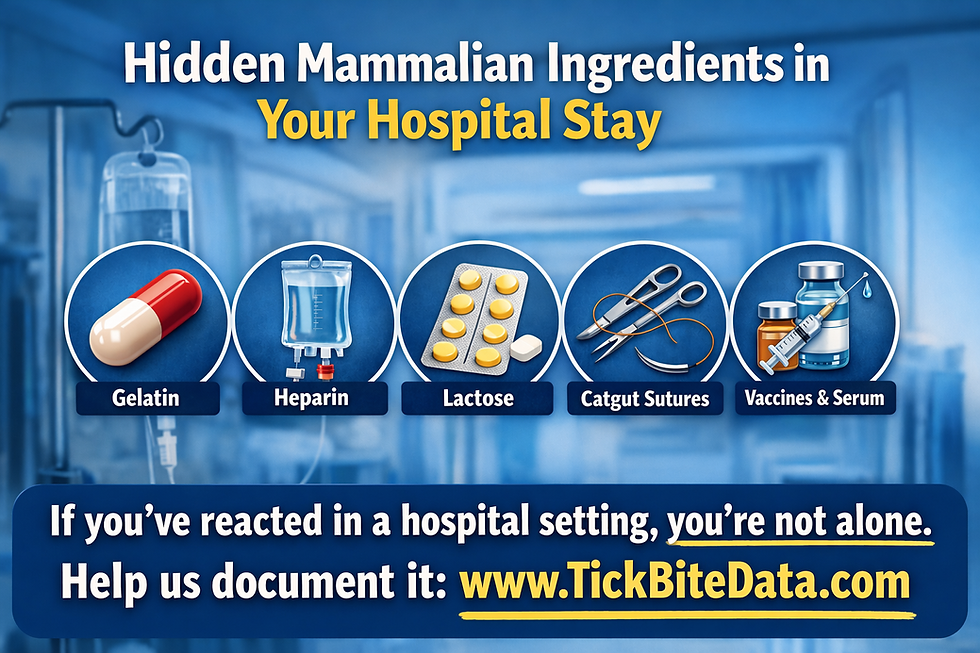
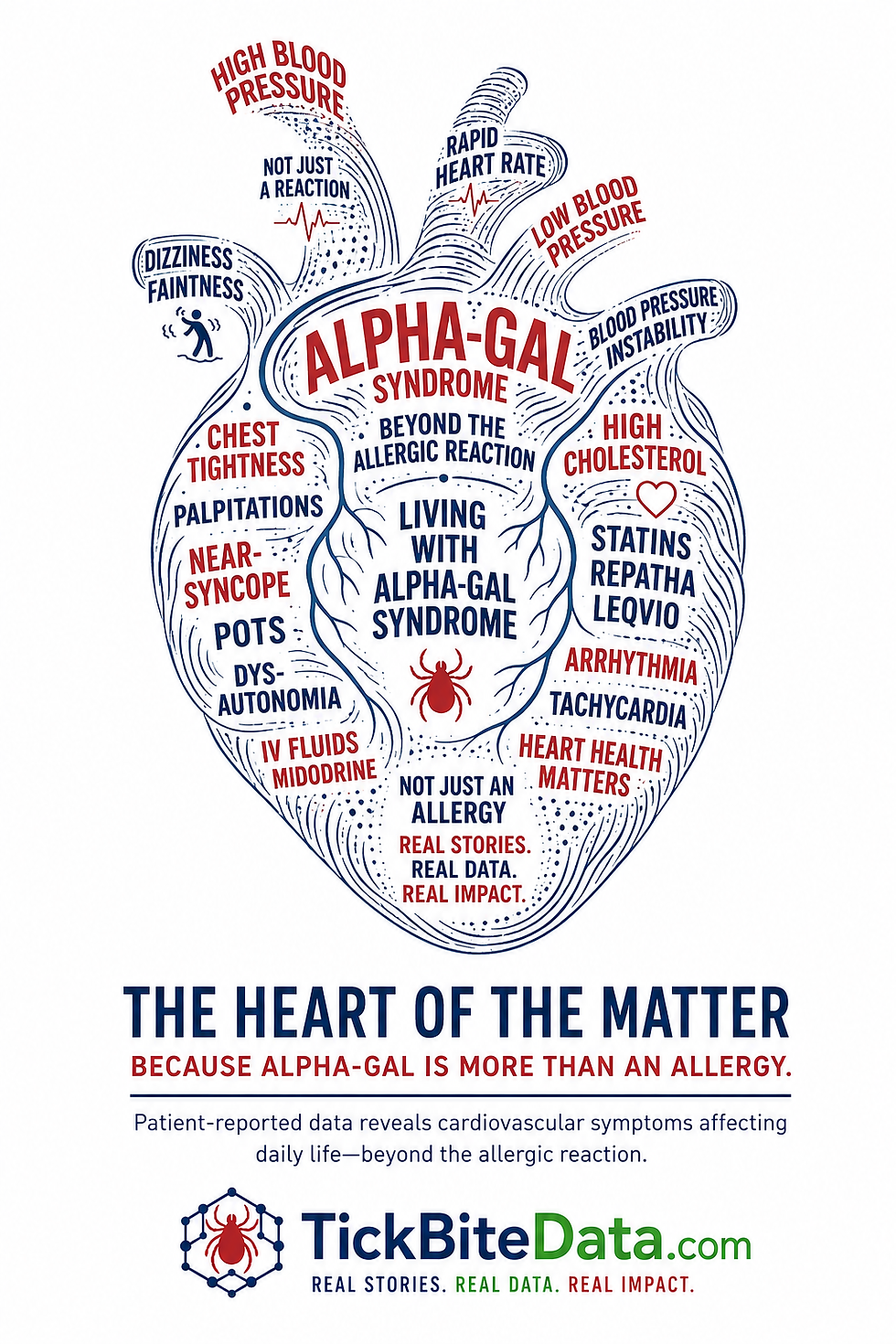
🧬 Common Mammalian-Derived Ingredients in Medications & Hospital Products

🩸 1. Gelatin (VERY COMMON)
Source: Cow or pig collagen
Found in:
Capsule shells (most capsules)
Vaccines (as stabilizer)
Some IV medications
Hemostatic agents (Gelfoam, Surgifoam)
👉 Why it matters: Gelatin has been directly linked to reactions in Alpha-gal patients.
💉 2. Heparin
Source: Pig intestines (porcine) or cow lung
Found in:
Blood thinners (heparin, enoxaparin/Lovenox)
👉 Hospital risk:Used constantly for IV lines, surgery, and clot prevention.
💊 3. Lactose (as an excipient)
Source: Cow’s milk
Found in:
Tablets (filler/binder in MANY medications)
👉 Often overlooked because it’s “inactive” — but still mammalian.
🧪 4. Magnesium Stearate / Stearic Acid
Source: Can be animal fat (or plant-based—varies by manufacturer)
Found in:
Tablets and capsules (lubricant)
👉 Key issue:Not always labeled as animal vs plant → ambiguity = risk
🧬 5. Glycerin / Glycerol
Source: Can be animal fat or plant-based
Found in:
Liquid medications
IV formulations
Topicals
🧴 6. Propylene Glycol (sometimes debated)
Source: Usually synthetic, but can be derived from animal fats in some processes
Found in:
Injectables
Oral syrups
🦴 7. Bone Char (Indirect Exposure)
Source: Animal bones
Used in:
Sugar refining (can appear in syrups, oral meds)
Filtered drinking water (bottled)
🧫 8. Bovine Serum / Animal Cell Media
Source: Cow blood/products
Used in:
Vaccine production
Biologics
🧵 9. Catgut Sutures
Source: Sheep or cow intestines
Used in:
Surgical procedures (less common now, but still used)
🩹 10. Collagen-Based Products
Source: Cow or pig
Found in:
Wound dressings
Surgical implants
Cosmetic fillers
💉 11. Albumin (Bovine)
Source: Blood proteins
Used in:
IV volume expanders
Some biologics
🧬 12. Pancreatic Enzymes (Pancrelipase)
Source: Pig pancreas
Used in:
Digestive enzyme replacement (Creon, etc.)
🚨 Why This Matters
These ingredients are not always disclosed clearly
Most are labeled as “inactive”, yet they still matter for AGS patients
Hospitals do not routinely screen for Alpha-gal risk. It is up to you communicate clearly upon admittance.
Patients can react even when avoiding food triggers