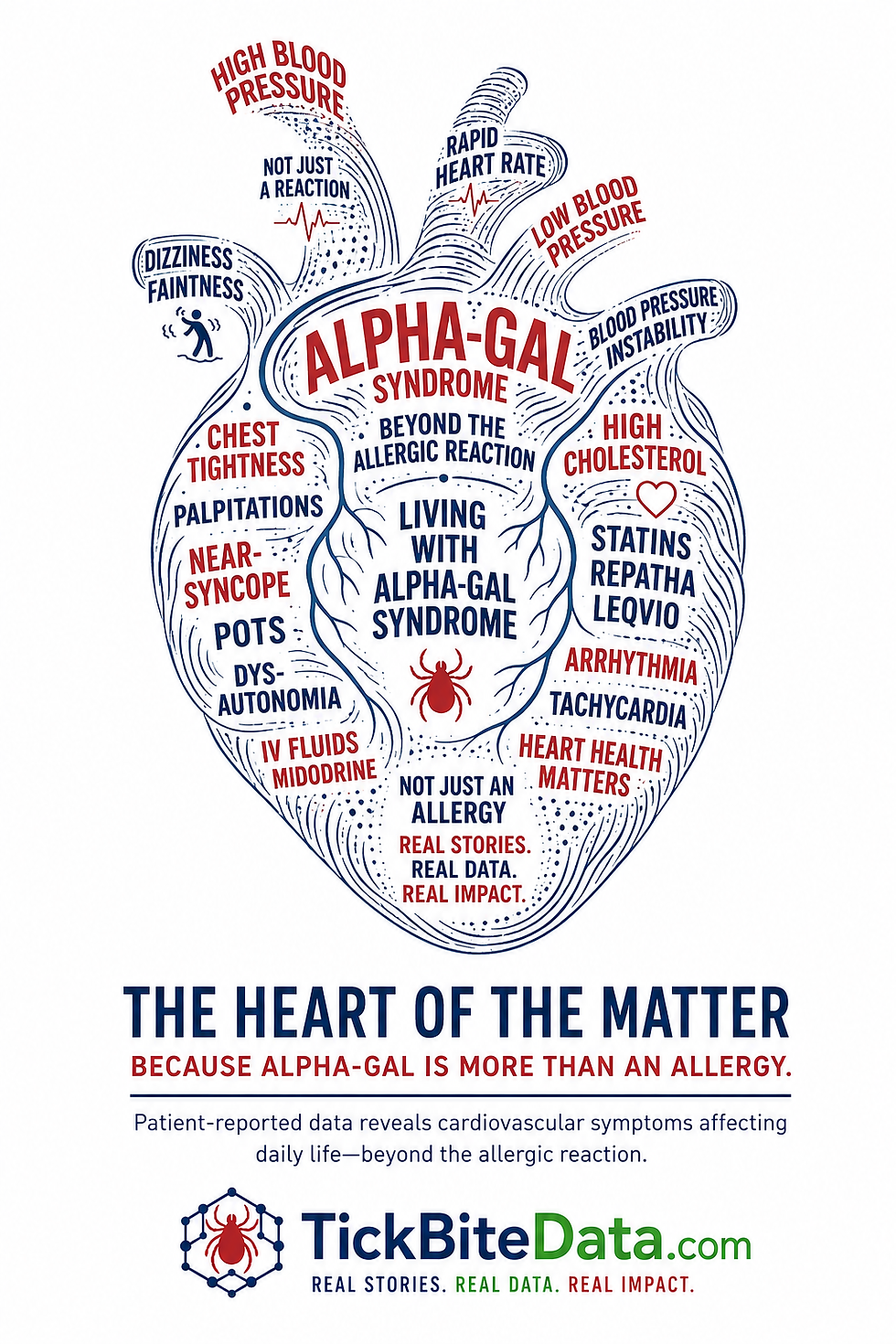
Pets, Histamine, and Alpha-gal Syndrome: Why Do Some Patients Feel Worse Around Animals?

For many families, pets are members of the household.
But for some individuals living with Alpha-gal Syndrome (AGS), Mast Cell Activation Syndrome (MCAS), allergies, or other chronic inflammatory conditions, time spent around animals can sometimes be accompanied by symptoms that are difficult to explain.
Patients frequently report experiences such as:
Sneezing
Congestion
Itchy eyes
Hives
Brain fog
Dizziness
Fatigue
Rapid heart rate
Increased inflammation
The question is simple: Can pets trigger histamine responses?
The answer is yes, however the reasons may be more complex than many people realize.
What Is Pet Dander?
Pet dander consists of microscopic skin cells shed by animals.
These particles often contain proteins from:
Skin
Saliva
Urine
Fur
Contrary to popular belief, many people are not actually allergic to fur itself. Instead, they react to proteins attached to fur and dander that become airborne and spread throughout the home.
According to the American Academy of Allergy, Asthma & Immunology (AAAAI), pet allergens can remain in an environment for months and are easily transported on clothing and household surfaces.
How Pet Allergies Trigger Histamine Release
In individuals with traditional pet allergies, the immune system produces Immunoglobulin E (IgE) antibodies against specific animal proteins.
When exposure occurs:
→ The allergen is recognized by IgE antibodies → Mast cells become activated → Histamine and other inflammatory chemicals are released.
This process can produce symptoms such as:
Sneezing
Runny nose
Nasal congestion
Itchy eyes
Hives
Wheezing
Asthma attacks
Cat allergy is one of the most extensively studied examples. Researchers (National Institute of Allergy and Infectious Diseases (NIAID)) have identified a major cat allergen called Fel d 1, which is produced primarily in the cat's saliva and sebaceous glands.
Histamine Responses Aren't Always Traditional Allergies
Not everyone who experiences symptoms around pets has a diagnosed pet allergy. Researchers increasingly recognize that environmental exposures can trigger symptoms through multiple pathways.
For example, individuals with:
Mast Cell Activation Syndrome (MCAS)
Histamine intolerance
Chronic inflammatory conditions
may experience symptoms when mast cells become activated, even without a classic IgE-mediated allergy.
Mast cells release numerous inflammatory mediators including:
Histamine
Tryptase
Prostaglandins
Leukotrienes
Symptoms may include:
Brain fog
Flushing
Dizziness
Headaches
Anxiety
Rapid heart rate
Gastrointestinal symptoms
The exact triggers vary widely from person to person.
What About Alpha-gal Syndrome?
This is where the conversation becomes more complicated. Alpha-gal Syndrome is an allergic condition associated with the carbohydrate molecule galactose-α-1,3-galactose (alpha-gal), which is found in non-primate mammals.
Most research has focused on reactions after consuming mammalian meat and certain mammalian-derived products.
However, many patients have reported questions such as:
Can I react to pet saliva?
Can I react to pet dander?
Can I react to living with animals?
At present, there is very little research demonstrating that pet dander itself causes alpha-gal reactions in AGS patients. That distinction is important.
There are currently no large studies showing that routine household exposure to cats or dogs triggers alpha-gal reactions in most AGS patients.
What Researchers Have Found
Scientists have identified alpha-gal molecules in various mammalian tissues and biological fluids. Research has also demonstrated that some mammalian-derived medical products can contain alpha-gal and trigger reactions in sensitized individuals.
Examples include:
Certain medications
Biological therapies
Gelatin-containing products
Some medical implants
However, the clinical significance of alpha-gal exposure through everyday pet contact remains poorly understood.
More research is needed before conclusions can be drawn.
Could It Be Something Else?
For some AGS patients, symptoms experienced around pets may not be related to alpha-gal at all.
Possible explanations in the home include:
Existing Pet Allergies
Pet allergies are common and may coexist with AGS.
Mast Cell Activation
Environmental allergens can contribute to overall mast cell activation and symptom burden.
Environmental Exposures
Pets may carry:
Pollen
Mold spores
Dust
Outdoor allergens
The resulting symptoms may be attributed to the pet when the actual trigger is something being transported by the animal.
Multiple Conditions Occurring Together
Many patients with AGS report additional diagnoses such as:
Asthma
Seasonal allergies
MCAS
Chronic inflammatory disorders
Symptoms may result from overlapping conditions rather than a single cause.
What We Still Don't Know
One of the recurring themes within the AGS community is that patients often identify patterns before research catches up. That does not mean every reported association is causal. But it does mean patient experiences can help generate important research questions.
Currently, we do not know:
How many AGS patients experience symptoms around pets?
Whether those symptoms are caused by alpha-gal exposure?
Whether mast cell activation plays a role?
Whether environmental allergens are the primary driver?
These are questions that deserve further study.
A Research Question Worth Exploring
As patient-reported research continues to grow, this may be an area worth investigating.
Questions such as:
"Since developing Alpha-gal Syndrome, have you experienced new or worsening symptoms around household pets?"
could help identify patterns that warrant future scientific investigation.
Understanding the full spectrum of environmental exposures that affect patients remains an important part of understanding the broader clinical picture of Alpha-gal Syndrome.
The Bottom Line
Yes, pets can trigger histamine release in susceptible individuals.
The evidence is strongest for traditional pet allergies, where animal proteins activate the immune system and lead to histamine release.
For individuals with MCAS, histamine intolerance, or other inflammatory conditions, environmental exposures may also contribute to symptoms.
When it comes to Alpha-gal Syndrome specifically, however, the role of pet exposure remains largely unanswered.
At this time, the science does not provide clear evidence that routine pet exposure causes alpha-gal reactions in most patients. But as with many aspects of AGS, there is still much we do not know. Maybe this should be our next survey? Sometimes the most important research questions begin with patient observations.
References
American Academy of Allergy, Asthma & Immunology (AAAAI). Pet Allergy Overview. https://www.aaaai.org
National Institute of Allergy and Infectious Diseases (NIAID). Allergic Diseases and Pet Allergies. https://www.niaid.nih.gov
The Mast Cell Disease Society. Mast Cell Activation and Histamine Release. https://tmsforacure.org
Commins SP. Diagnosis & Management of Alpha-gal Syndrome. Journal of Allergy and Clinical Immunology: In Practice. 2020.
Wilson JM, Platts-Mills TAE, Schuyler AJ, et al. Investigation into alpha-gal and mammalian-derived products in sensitized individuals. Current Allergy and Asthma Reports. Various publications.