

Alpha-gal Syndrome May Be One of the Most Under-Recognized Allergic Conditions in the World
Alpha-gal syndrome (AGS) is a tick-borne condition that causes people to develop an allergic reaction to mammalian meat and animal products. Although the condition has gained increasing attention in the United States in recent years, many scientists believe Alpha-gal may be far more widespread globally than most people realize.
In fact, research suggests Alpha-gal sensitization may affect millions of people worldwide, particularly in regions with high tick exposure.
Despite this, the condition remains poorly understood, frequently misdiagnosed, and significantly underreported.
What Is Alpha-Gal Syndrome?
Alpha-gal syndrome is triggered when certain ticks introduce a sugar molecule called galactose-alpha-1,3-galactose (alpha-gal) into the human bloodstream during a bite.
This molecule exists in most mammals but not in humans or other primates.
For reasons researchers are still studying, some individuals develop an immune response after exposure. Once sensitized, the body may react when mammalian products are consumed, including:
Beef
Pork
Lamb
Venison
Gelatin
Certain dairy products
Some medications derived from animal sources
Unlike most food allergies, reactions from Alpha-gal syndrome are delayed, often occurring 3–6 hours after eating.
This unusual delay has historically made the condition difficult for doctors to identify.
A Growing Problem in the United States
In the United States, Alpha-gal syndrome has been strongly associated with the Lone Star tick (Amblyomma americanum).
Over the past two decades, the Lone Star tick has expanded far beyond its traditional southeastern range. Today it is found across much of the eastern and central United States.
Researchers estimate that hundreds of thousands of Americans may already be affected, and the number continues to rise as tick populations increase.
But the United States is only part of the story.
Evidence of Widespread Global Exposure
Studies conducted in parts of Africa, Australia, Europe, and Asia show that many people exposed to ticks develop antibodies to alpha-gal.
In some African populations, researchers have found 20–35% of individuals test positive for alpha-gal antibodies.
However, many of these individuals do not report classic meat allergy symptoms.
This raises an important question scientists are still investigating:
Why do some people develop severe allergic reactions while others only develop antibodies without symptoms?
Understanding this difference could provide key insights into how Alpha-gal syndrome develops.
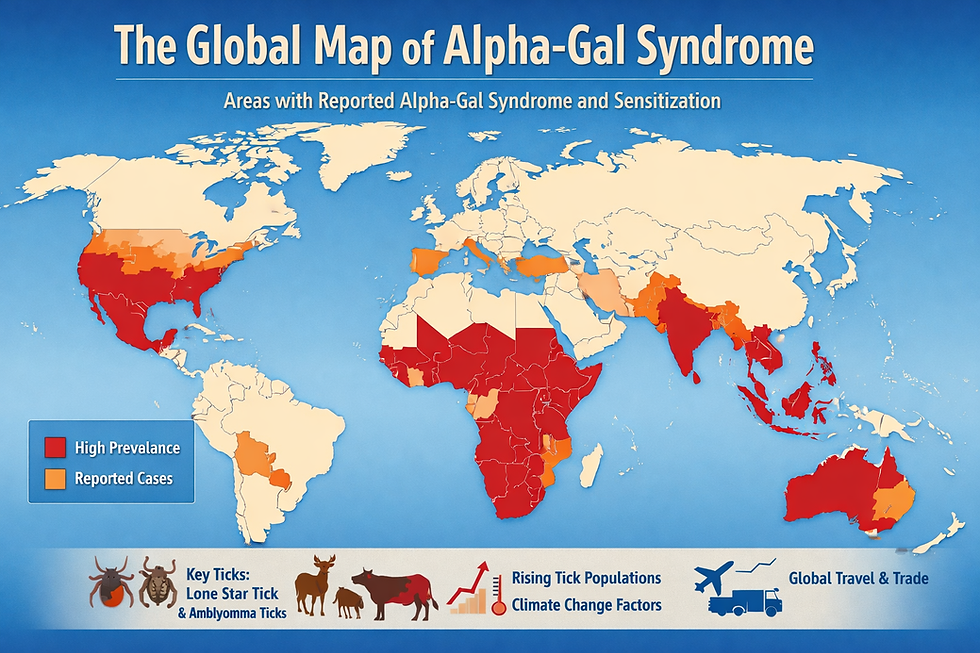
Tick Expansion Could Increase Global Risk
Ticks are expanding their geographic range due to several environmental and ecological factors.
These include:
Warmer temperatures and milder winters
Expanding deer populations
Changes in land use and suburban development
Increased movement of wildlife and livestock
As tick populations increase and spread into new regions, more people are exposed to tick bites capable of triggering alpha-gal sensitization.
Some scientists believe this trend could lead to a significant rise in Alpha-gal syndrome over the next several decades.
Why Alpha-Gal Is Often Missed
Even in regions where Alpha-gal syndrome is present, it often goes undiagnosed.
There are several reasons for this.
First, the delayed reaction makes it difficult to connect symptoms to food consumption. A person may eat meat for dinner and not develop symptoms until the middle of the night.
Second, symptoms can vary widely. Some individuals experience:
Hives or itching
Gastrointestinal distress
Severe stomach pain
Fatigue
Difficulty breathing
Anaphylaxis
Others may experience milder or intermittent symptoms that are difficult to identify as an allergy.
Finally, many healthcare providers are still unfamiliar with Alpha-gal syndrome.
As a result, patients may go years without a correct diagnosis.
Why Better Data Is Needed
Despite the growing number of cases, there is still very little large-scale data available about Alpha-gal syndrome.
Researchers are still trying to understand key questions such as:
Why some people develop Alpha-gal syndrome while others do not
Whether repeated tick bites worsen the condition
How long the allergy lasts
Whether the condition can resolve over time
What long-term health effects may occur
Without larger datasets, these questions remain difficult to answer.
The Role of Public Participation
Collecting real-world data from individuals who have experienced tick bites or Alpha-gal syndrome may help scientists identify patterns that currently go unnoticed.
Information about:
Geographic location
Tick exposure
Symptoms
Diagnosis timelines
Lifestyle changes after infection
could help researchers better understand the true scope of the condition.
Large public datasets may eventually help identify risk factors, geographic trends, and long-term health impacts associated with tick exposure.
A Growing Public Health Issue
As tick populations expand and awareness of Alpha-gal syndrome grows, many scientists believe the condition could become an increasingly important public health issue.
Improving surveillance, expanding research funding, and collecting better data will be essential for understanding how widespread Alpha-gal syndrome truly is—and how best to prevent and treat it.


